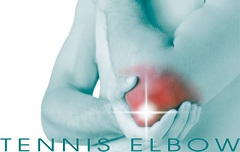
I do try to keep up with what’s going on in the medical profession when it comes to golfer’s elbow treatment and recently came across this interesting article regarding a particular case of steroid injection for golfer’s elbow. If you don’t like all the technical speak, skip straight to the last sentence which is the most important one:
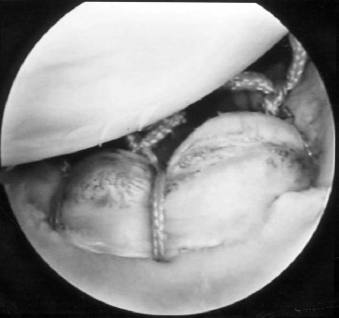
Examination revealed atrophy of the skin and subcutaneous fat over the medial epicondyle causing the epicondyle to become prominent like an osseous mass (). Marked tenderness was observed over the prominent medial epicondyle by palpation.
Intraoperatively, the atrophied skin and subcutaneous fat tissue were excised from an ellipsoid incision. Two chalky, whitish deposits of corticosteroid were observed over the flexor aponeurosis. The deposits were excised. The common flexorpronator origin was partially detached by sharp dissection and reflected without disturbing the medial collateral ligament. The underlying fibrous tissue was debrided. The medial epicondyle was drilled, creating multiple bleeding small holes, and then the flexorpronator origin was reattached. The adjacent subcutaneous tissue and skin were released and brought over the epicondyle, forming good soft tissue coverage. Three years postoperatively, the patient had unlimited range of elbow motion with no epicondylar pain, and no pathologic bony prominence of the epicondyle was observed.
Although steroid injection for the conservative treatment of medial epicondylitis is an alternative method, previously reported complications of periarticular injections and the case presented here demonstrate related adverse effects or complications. Injection into the medial site of the elbow may not be as innocent as expected if appropriate injection technique is disregarded.
Now I don’t want to be a doom munger here and if you read the 150+ comments on my golfer’s elbow cure page, you’ll notice that a few people have experienced good success with steroid injections, and I realise that this article is referring to poor injection technique. However my personal view is that injections of corticosteroid for medial epicondylitis is generally a bad idea. Not just because it can go wrong, in the case of the lady above, but also because it’s just masking the pain rather than treating the cause. If you like weightlifting like I do, I think there’s a real risk of making the injury worse. After all, the pain is there to make you aware that something is wrong and needs your attention. Pain is your friend!
As if getting over golfer’s or tennis elbow wasn’t wasn’t bad enough, you have to watch out for scammers too. Take a look at this blatant scammer on Amazon selling a single elbow pain product called TenDLite LED. Why do I say this is a scam? Here’s why (figures correct at the time of writing):
- There are 7 reviews for the product, all suspiciously 5 star with 5 of them very suspiciously submitted on the same day (20th April) with a 6th the day after (21st April).
- Between the 7 reviewers, they have only done 12 reviews in total, an amazing 10 of them are for the TenDLite LED (3 have reviewed it twice, including a previously withdrawn TenDLite LED listing).
- Despite the 10 impressive 5 star reviews, TenDLite as a seller has only had 4 life time purchase ratings!
- Checking the TenDLite website “FDA Approved” is all over it, except where, in their haste to shout this from the rafters, it was misspelled as “FAD Aprooved“, along with “Strenght and flexibility“. It may be being picky, but basic spelling mistakes are fairly dodgy.
Maybe I’m being harsh, but I don’t think I’m wrong. Watch out guys and gals, not all is as it seems out there, and at the end of the day, it’s your health that’s at stake, or at least your hard earned cash anyway.


 What I discovered is that I could do narrow stance push ups without any significant pain, so narrow stance burpees are also in then, providing I don’t do them to excess I think. So the workout I did was this:
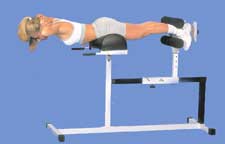 3 rounds of:
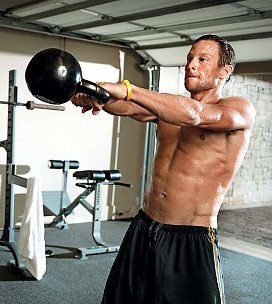 21-15-9 of:
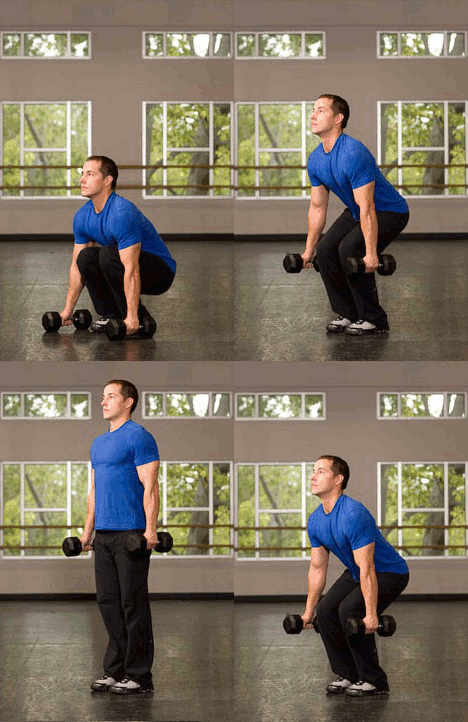 AMRAP (As Many Rounds As Possible) in 10 minutes of:
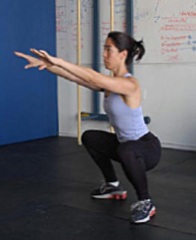 3 x Tabata of:
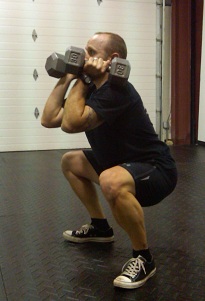 Torn Rotator Cuff Workout 6
 I have been to see a physiotherapist about my shoulder, but for some reason I always come away underwhelmed by them. They charge a fortune and I’m never convinced by the efficacy of what they do. But perhaps that’s just the one’s near me! I’m all for self learning and educating myself as to the problems, issues and treatments, as it makes me better able to understand and manage my own recovery, and I thank the stars for the internet, which enables this to happen so effortlessly in this day and age, particularly when it comes to accessing the best information from around the world.
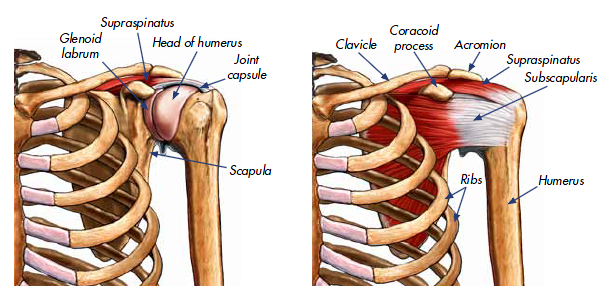
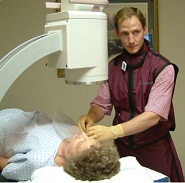 Neither of these is a good thing to have! Diagnosing the PASTA tear was relatively easily and completely painlessly done via an ultrasound. The SLAP diagnosis was done with an MRA though, which is not so pleasant. MRA stands for Magnetic Resonance Arthrogram (sometimes Magnetic Resonance Angiogram) or more succinctly can be described as MRI + contrast dye.
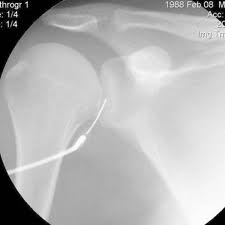 The basic process is, before you get the MRI scan (Magnetic Resonance Imaging) you first have a contrast die injected into your shoulder. Unlike an Angiogram where die is injected into your blood stream, for a SLAP scan the die is injected directly into your shoulder. This is NOT NICE! The procedure was done whilst under an x-ray machine and takes several minutes during which the needle is constantly in your shoulder. The dye is injected directly into the labral area as shown on the x-ray.
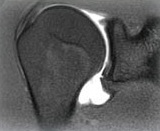 The reason for this is the doctor needs to make sure the needle is exactly in the right place in your shoulder joint so that the labrum shows up properly in the MRI scan. So after an initial local anaesthetic, he sticks the big needle and, takes an x-ray, adjusts it, takes an x-ray etc etc until it’s right. Then he injects the contrast dye, which is another unpleasant experience I could do without repeating. But it’s worth it in the end, as the MRI scan shows up the labrum very clearly. Note that this isn’t my picture, it’s just one I found on the net, I have yet to see my own scan images.
 The above story happened to Salford/Manchester man Peter Flanagan who along with his son Neil and girlfriend were all arrested, this week learned that the police would not be pressing any charges against him despite the fact that he admitted stabbing and killing 27 year old John Bennell. We’ve all heard stories of people doing what Peter Flanagan did; remember Tony Martin, the Norfolk farmer who shot and killed 16 year old Fred Barras with a shotgun when Fred and his accomplice broke into his house? Martin was originally sentenced to 10 years in prison for murder, eventually serving 3 years inside after the conviction was reduced to manslaughter on appeal.
 “I have today told the police of my decision that Peter Flanagan should not face any charges in connection with the death of John Bennell, an intruder who broke into his home in Salford on 22 June. John Bennell was stabbed in the chest by Mr Flanagan, and died from his injuries shortly afterwards.
 Note point (4), somewhat counter-intuitively it’s actually ok to use excessive force, as long as you didn’t realise it was excessive at the time. Or put another way, if you genuinely believe you were using reasonable force, even if in hindsight you were mistaken and actually used excessive force, you can still successfully claim you acted in self defence. Think back to the shooting of Charles de Menezes, an innocent man who was shot 7 times in the head because the firearms officer believed he was a suicide bomber, a mistake that was only discovered later.
  As it happens I think the force Peter used *was* reasonable, given that John Bennell (or one of his accomplices) was armed with a machete, and clearly the Chief Crown Prosecutor agrees. I would suggest that it was Tony Martin’s illegal shotgun, the traps he’d set in his house against burglars and the fact that he shot Fred Barras in the back as he was fleeing out the window, that probably sank his self defence claim! He clearly fails all of the above tests.




Recent Comments